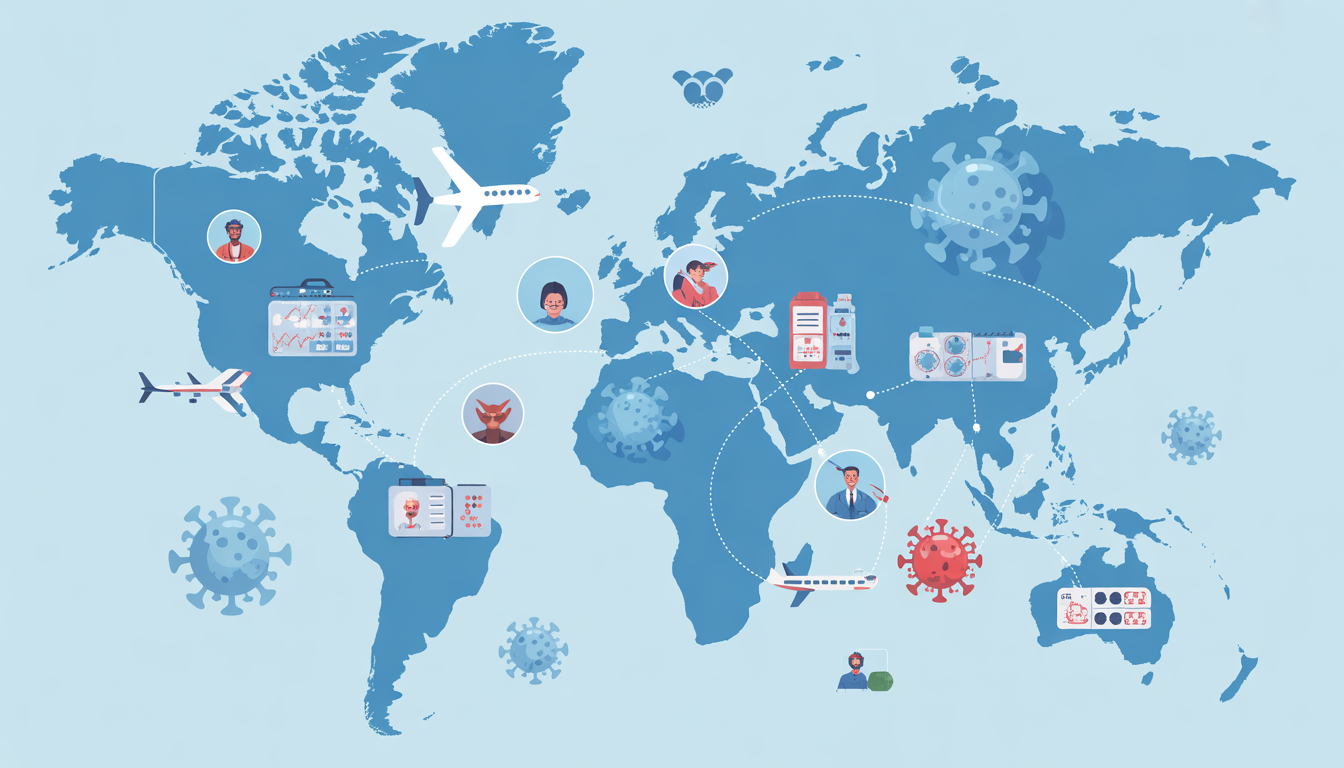
As the world continues to grapple with the aftermath of previous pandemics, health authorities are working hard to track new strains of the virus. By January 22, 2026, organisations such as the World Health Organisation and the Centres for Disease Control and Prevention have declared more practised surveillance measures as international travel has significantly increased.
This measure is implemented when the number of air passengers is approaching pre-pandemic levels, and it is feared that an uncontrollable outbreak of infectious diseases may occur anywhere in the world in a short period of time.
The move is informed by past outbreaks, during which variants frequently emerged in a single region and were later introduced to other parts of the world through travel networks. The health specialists note that early warning is essential to prevent small threats from becoming major crises.
The WHO has been a frontrunner in expanding its Global Influenza Surveillance and Response System to include broader genomic sequencing of samples from international travellers. This network, which has liaised with more than 160 institutions in 131 countries, now includes real-time data sharing of variants of concern of not only the influenza virus but also other respiratory pathogens.
New developments see pilots testing nasal swabs at major airports, which should allow early identification of mutations that might be resistant to current vaccines and therapies. In the same vein, the CDC has expanded its Traveller-based Genomic Surveillance program, which originally centred on SARS-CoV-2, to cover a broader range of viruses, including flu and RSV, as well as emerging strains.
The United States is piloting voluntary sampling at its airports, including those in New York, Los Angeles and Atlanta. Such initiatives aim to sequence positive samples quickly and post the results to public databases, providing policymakers with actionable information.
The European health agencies, through the European Centre for Disease Prevention and Control, have done the same by intensifying border and wastewater surveillance at major transit points. This is a multi-pronged strategy that integrates screening of travellers with environmental monitoring to intercept the spread before it begins to spread among communities.
Roles of Surging International Travel in the Spread of the Virus
The rebound in global mobility has come as a two-edged sword. On the one hand, it is an indicator of economic recovery and cultural reconnection; on the other hand, it increases risks. The International Air Transport Association data shows a 25% increase in international flight volumes compared to the previous year, with Asia-Pacific routes recording the highest growth. This connectivity, although useful, follows trends that have occurred during the COVID-19 period as well, with full flights spreading variants from the pandemic epicentres to other continents.
Scientists observe that the tight spacing of flights and turnovers in busy airports creates the perfect environment for the virus to spread. Recent years studies demonstrate that air travel is associated with the increased rate of infections in countries of destination.
An example of this is spikes in local cases that occur soon after the high inbound traffic in areas where a new variant was reported. Health authorities have cautioned that, in the absence of careful surveillance, these travelling habits may accelerate the evolution of viruses that may become more transmissible or more virulent.
Virologists and epidemiologists are raising the alarm about the need for continued vigilance. Dr Elena Ramirez, one of the WHO’s major infectious disease experts, said that the interaction between human mobility and viral mutation requires swift measures. She has indicated that, due to diverse viral reservoirs, subtropical regions are areas of particular concern as travel between them increases.
It is widely agreed among academics that genomic surveillance should be accompanied by vaccination programmes. A circulating variant-specific booster is a priority, particularly among vulnerable groups. Travellers are also being encouraged to take precautions, including masking during flights and early testing on arrival, to help prevent the spread of COVID-19.
It is the Challenges and Future Outlook to Global Health Security
Despite these achievements, problems remain. The lack of funding in low-resource countries makes extensive monitoring impossible, leaving gaps in the global network. Also, privacy issues in traveller data collection have generated some controversy, but they have been addressed through anonymised sampling.
In the future, the scholars believe that artificial intelligence will be applied to the surveillance system, and this model will improve predictive features, forecasting different paths of the variants based on travel information. International agreements are important for ensuring fair access to vaccines and diagnostics.
With the world living in this new normal, there is a need to focus on surveillance, which is important for a joint effort to prevent future pandemics. As the travel industry remains buoyant, these measures are crucial shields, combining science, policy, and international collaboration to safeguard people’s health in an interdependent age.